






|
|||||||
|
|
|
|
|
|||
|
|||||||
|
Tektron Type 50 Monoblocks April 2026 The type 50 tube is a rarity. And elusive. When I first started my tube audio obsession more than 20 years ago, it seemed to me that the Type 10 was the rare and under-appreciated triode, but fast forward to the present (in 2026) and the 10 seems to have found its place again as both a driver and a power tube. But the Type 50 still remains in the shadows. It took a long time and a lot of searching to find a 50 amp of any kind, much less the top-shelf boutique build like the one featured below, from the Italian builder Tektron. But much like the 6C33C monoblocks I featured recently, the wait was worth it. I’ve been interested in the Tektron amplifiers for quite some time. They don’t come around very often on the used market, which does say quite a bit. Several that I’ve seen in the past were built to run a number of triodes, 2A3, 300B and 50, all on one platform. My pair of Tektron featured here are fully dedicated to the Type 50, and based on their sound they appear to be a no-holds-barred build on that special archaic tube. The amps themselves are very well constructed, with thick solid copper top plates, custom wound transformers and beautiful “soft-looking” olive wood bases. Small panel meters tell the story of the power tubes, and allow manual biasing with tiny recessed screws. Other than the somewhat cheesy plastic on-off switches and 90’s styled brass badges, the amps present as sophisticated and refined. These are gorgeous amps in person, and look as good as they sound. In the Tektron monoblocks, the 50 is a very vivid sounding tube! It’s got space, micro-detail and richness oozing out everywhere, but it’s the incredibly realistic imaging and tonality that really jumped out at me. The first time firing up these gorgeous monoblocks presented me with an almost unbelievable believability. I thought I’d heard spooky, but the 50 seems to be the king of spook. If it’s in the recording the Tektron 50 makes the sound in the room. It’s very evident that this tube is a spatial king. Performers are up front and simply leaping out of the speaker. The sound feels like it wraps around the scene and all of the depth and width is plain to hear. An intimate recording like Rachel Yamagata’s Duet is so real I feel like I’m sitting in the grass under a tree hearing her and her partner just inches away. The short talk about “the birds everywhere” at the beginning is more real than ever before. Some amps that I love just gloss over that small sequence. The Tektron 50 makes it absolutely real. Overall the Tektron 50 monoblocks just seem to excel at everything. Bass is full and rich, nothing is missing or subdued in the lower registers, it’s very natural feeling. The top end is not lacking. And the midrange is so magical that it’s absurd. Of course I could not resist experimenting a bit with the 50 tubes! My amps came well equipped with 1920’s RCA globes, as well as a pair of modern Psvane 50 ST. Many years ago I bought a pair of 20’s Ken-Rad globes and have been holding them in anticipation, and now I finally got to fire them up! I also picked up a pair of unmatched 30’s ST tubes, as well as a modern pair of Sophia ‘mesh plate’ 50. As you can see, I had a nice selection of both vintage and modern power tubes to play with in the Tektron. Long story short, I found both of the old globes to be in a class of their own, while the vintage ST are a small step behind across the board, but are still exceptionally good sounding tubes. The two modern versions of the 50 sound very good as well, with the Psvane being very close to the vintage ST flavor. The Sophia are quite euphoric and present with much the same flavor as their mesh 45 and 2A3, a kind of house sound to my ears. And while I enjoy it because it is a superb sound, knowing now what the original globe 50 sounds like I can say the Sophia doesn’t stand out as sounding particularly ‘50’ to me. So why isn’t the Type 50 the tube of choice for everyone? A big part of the reason is rarity, due in large part to the short duration of the tube on the market back in the early days. Making 4 watts single ended, the 50 was the powerhouse of the late 1920’s. It dwarfed the output of the 71a and the 45, and was the big boy on the scene in 1928 and 1929. But it’s a 7.5-volt tube, and much like the Betamax / VHS battle of the 80’s, the market selected 2.5 volt as the standard. The 45, 2a3 and the 300B all evolved out of that choice, and the 50 really only had 2-3 years of application. Type 50 tubes in the ST shape remained in production for a while to meet the need for replacements in existing equipment, but the market itself went in a different direction. This makes it a dinosaur. What a shame, as I can’t think of another American tube type that betters its performance. In comparison to the 45, the 50 is a more spatially vibrant in its presentation, but the little 45, especially the early ST, still has a more driven feeling. I’ve said it before, but a well implemented 45 is really a hard act to follow and is probably the best all-round choice out there. Compared with the 2A3, the 50 is a more ripened fruit, perhaps a little softer but also a little sweeter. And again, its more spatially enhanced. But otherwise the 50 in my room is more similar to the 2A3 than its other siblings on hand. The 300B is a very different sound in my room, more relaxed and less vibrantly realistic; perhaps even a little slow. The Tektron 50 monoblocks below are certainly end-game amplifiers by any reasonable standard. In play the amps are flat out superb performers, and given the right speaker, they produce a presence and visceral reality that is addictive and will be hard to top. When I reflect on all of the amps that I’ve had over the past few decades a few shine out a little brighter in my memory, and I think this pair do live up to that competition. These are beautiful, and rare, but most importantly they capture and transmit some of the soul that I love hearing in my music. Bravo Tektron, your creation is sublime (and spooky!). Thank you for bringing the 50 to life for me. Super highly recommended. |
||||||||
|
||||||||
|
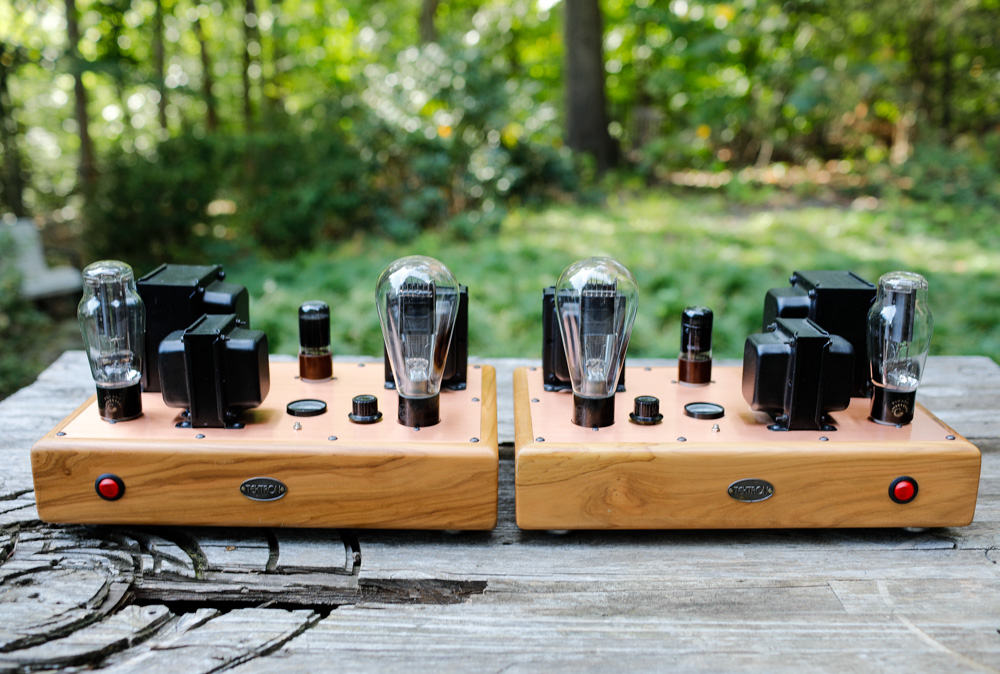
Beautiful amplifiers! |
||||||||
|
||||||||
|
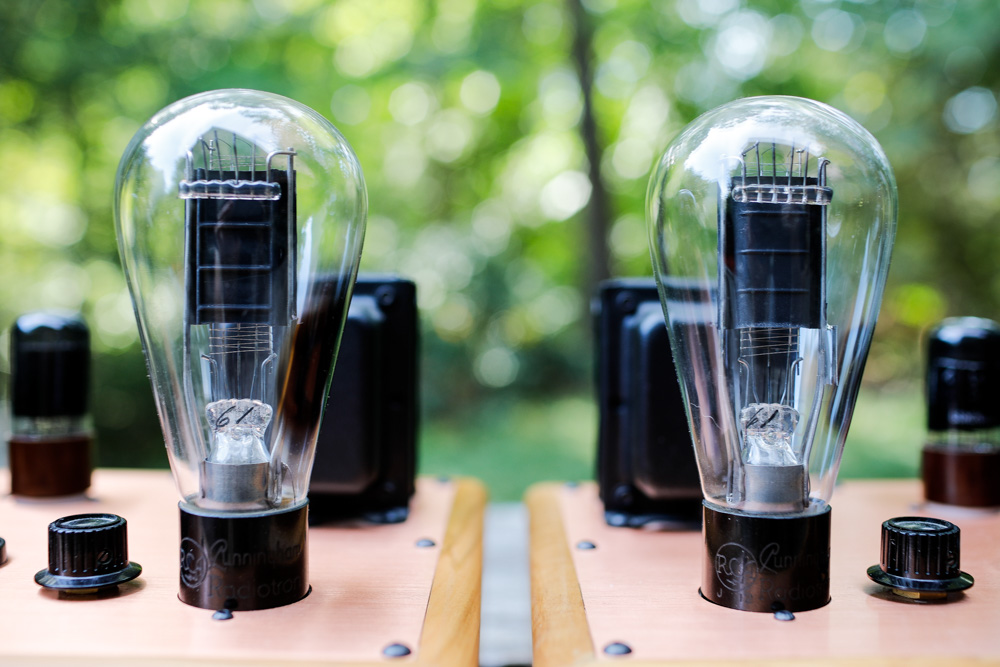
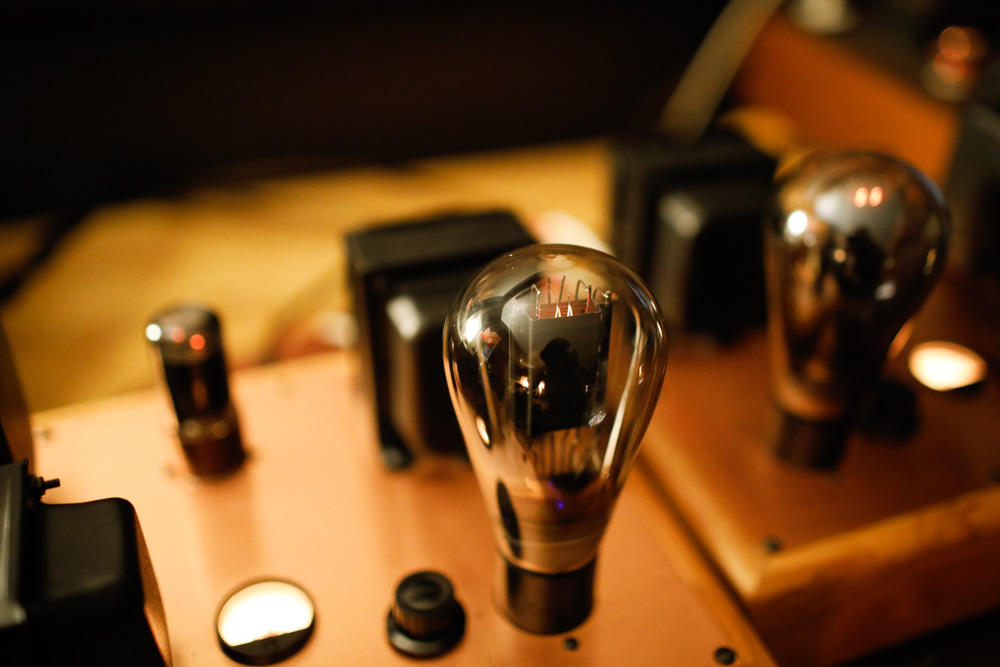
50 globes are large and imposing vacuum tubes. One of the coolest looking tubes I’ve handled. |
||||||||
|
||||||||
|
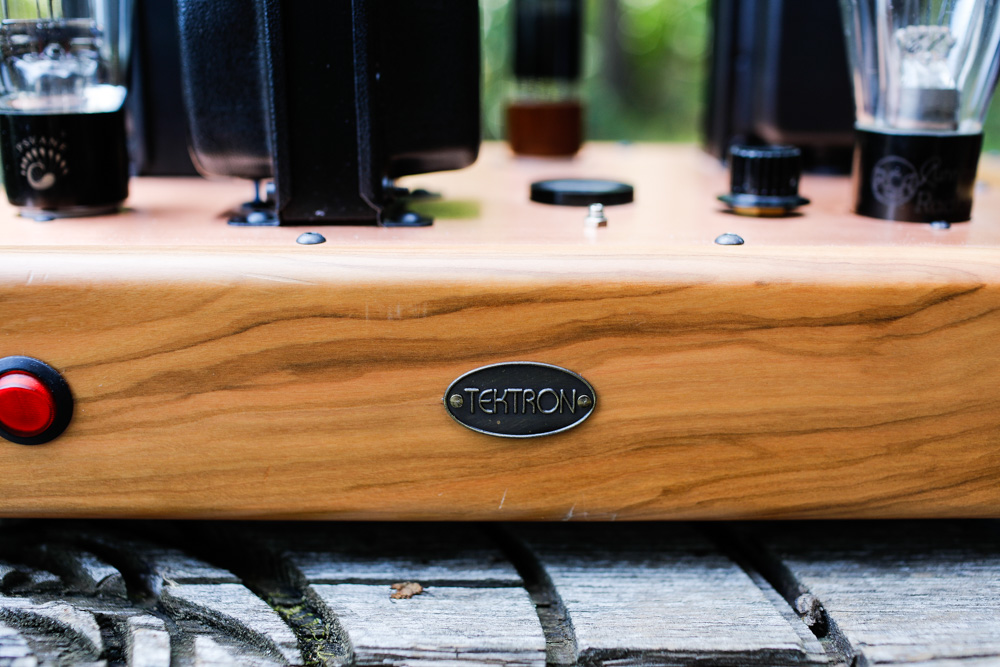
This pair have a few miles on them now. |
||||||||
|
||||||||
|
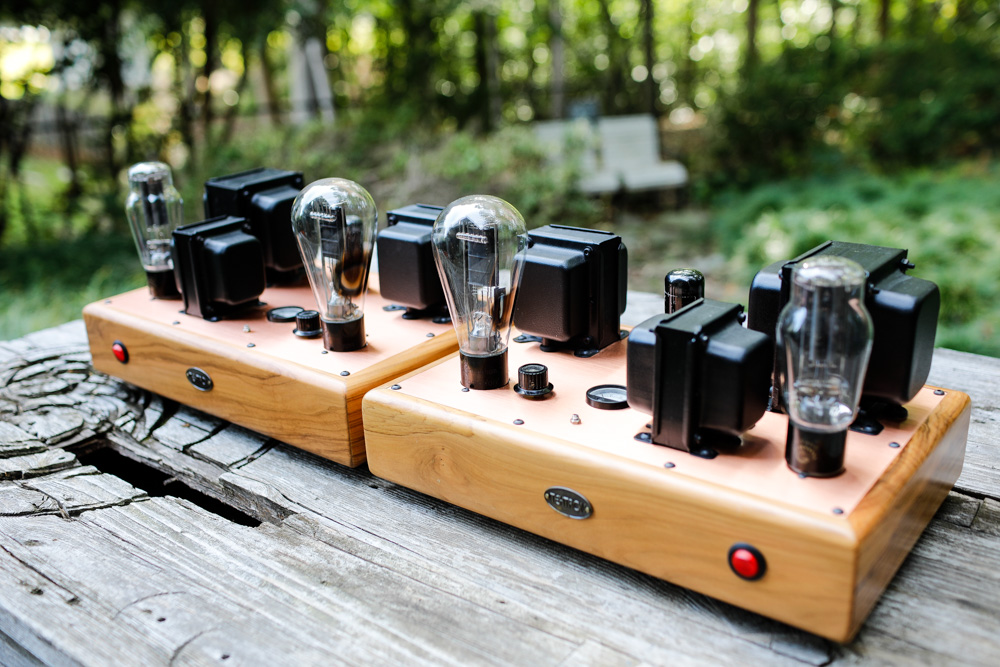
I appreciate the way these were laid out, not just cookie cutter twins. |
||||||||
|
||||||||
|
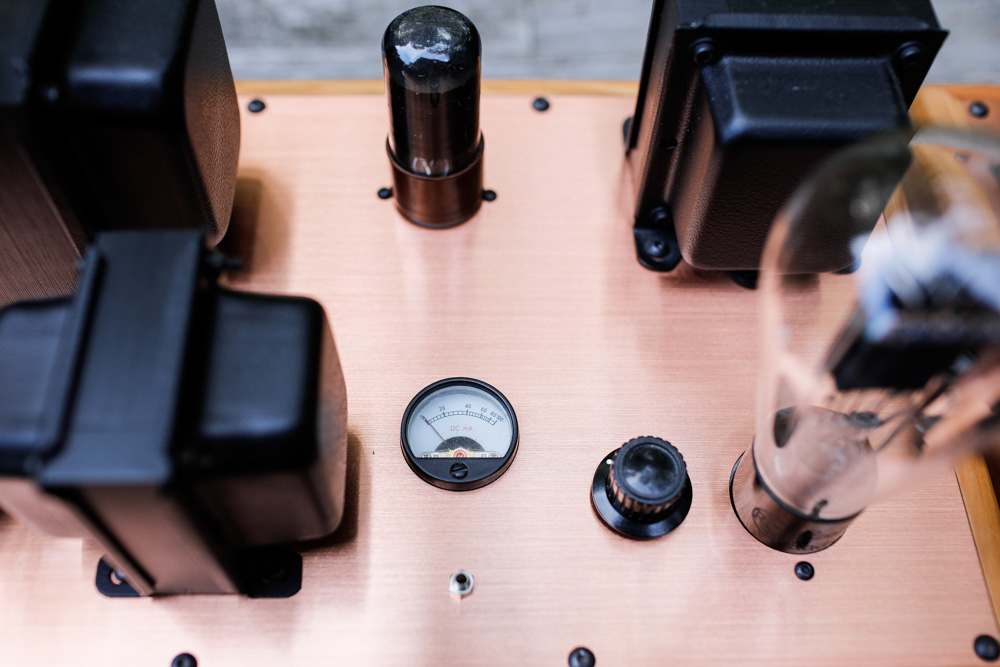
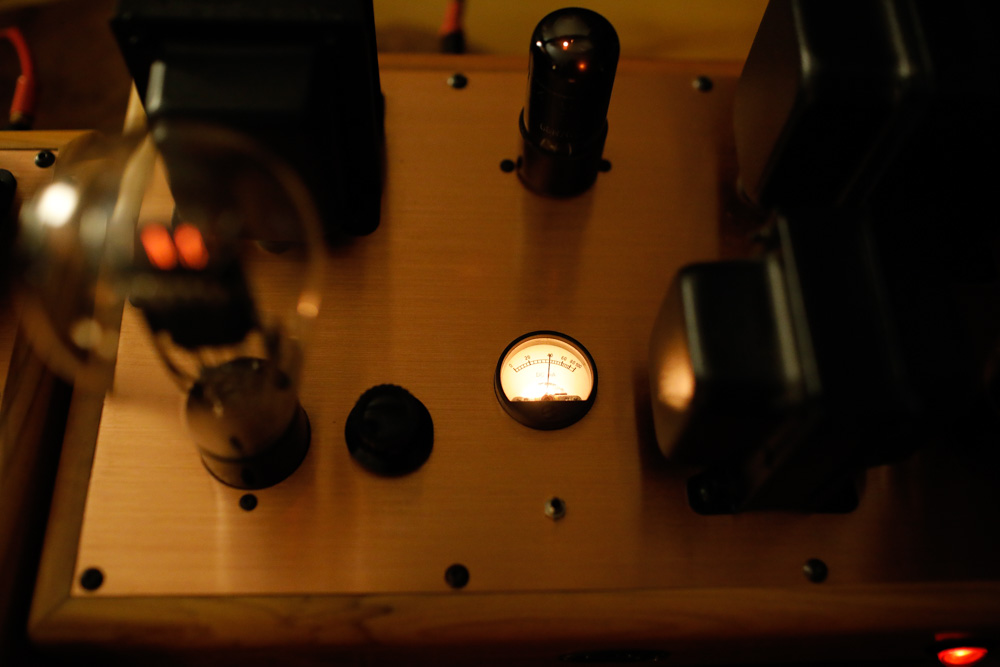
The built in panel meters allow you to quickly bias the output tubes, and it gives some indication of tube life. The dial is a hum pot, not a volume control unfortunately, but I’ve never need to use it. |
||||||||
|
||||||||
|
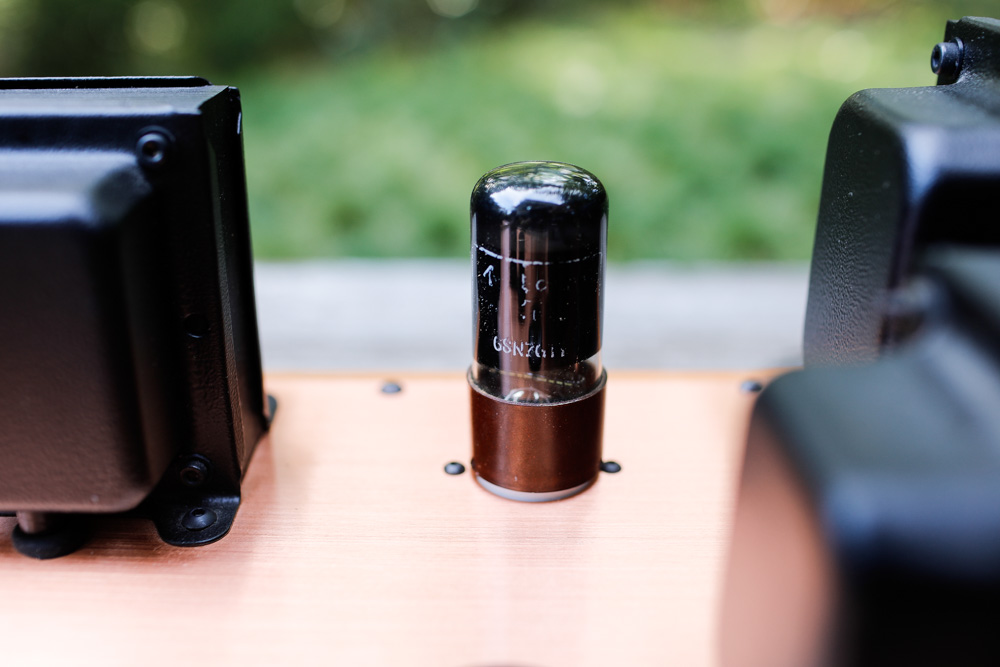
6SN7 drivers. |
||||||||
|
||||||||
|
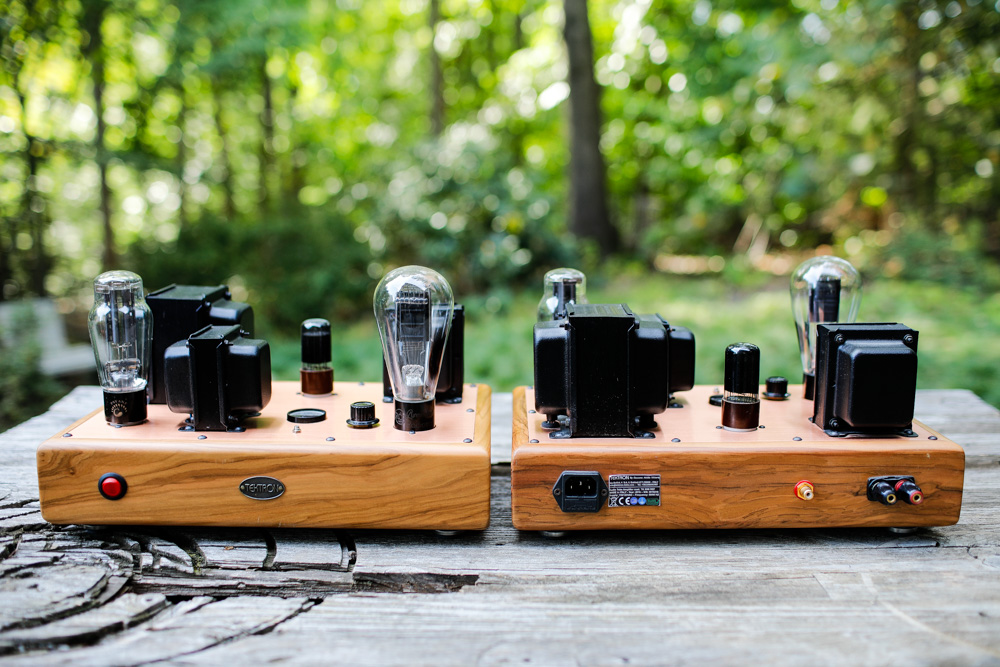
Overall very clean and classic builds. The olive wood grain is really nice. |
||||||||
|
||||||||

|
||||||||
|
||||||||
|
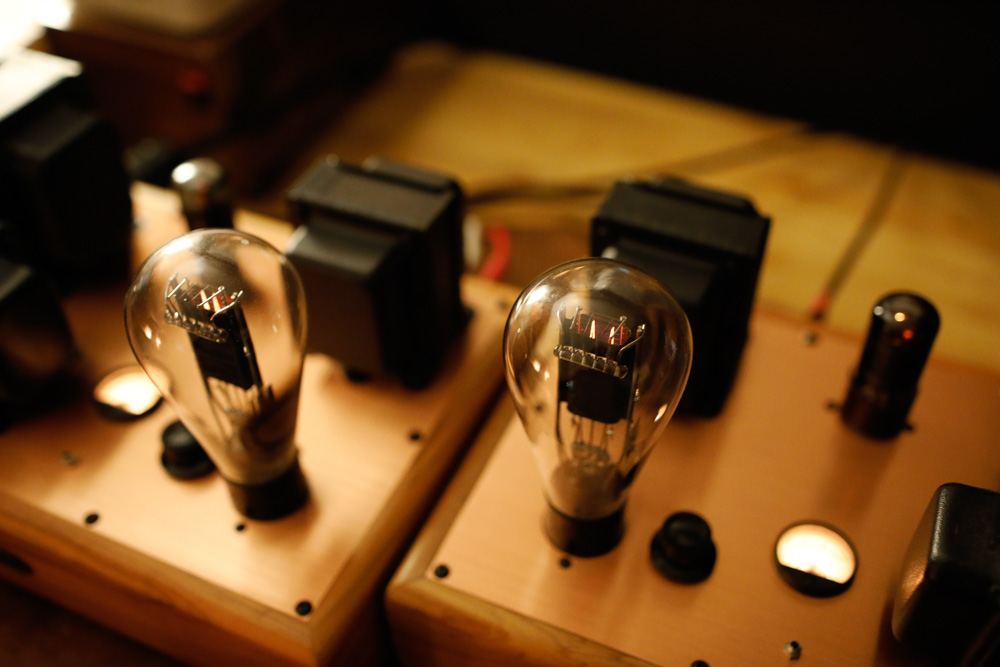
I like panel meters and this is a very elegant take on it. |
||||||||
|
||||||||
|
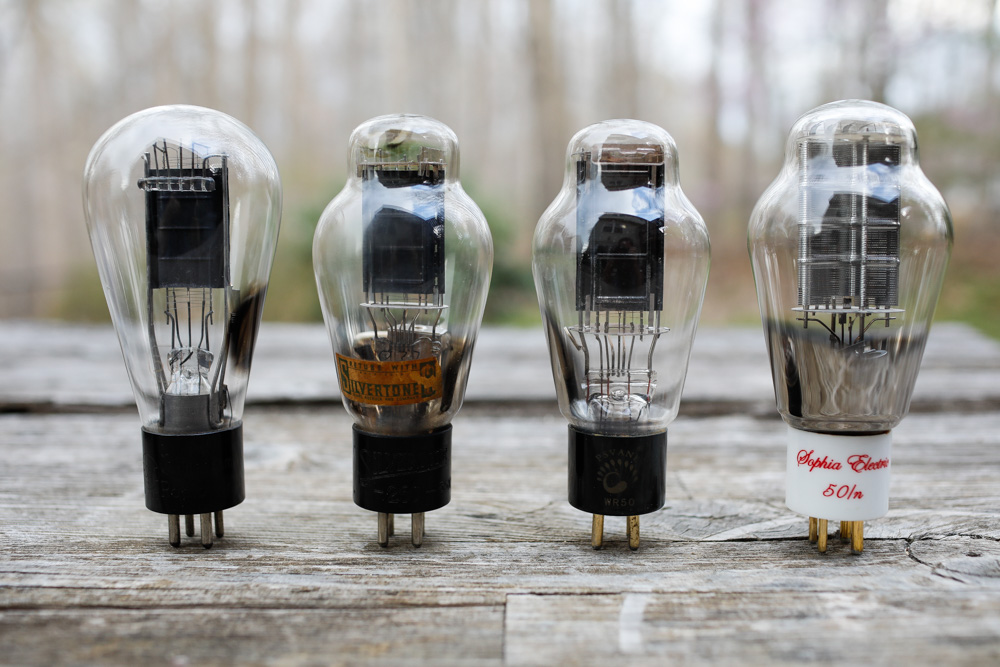
A representative selection of Type 50 tubes: RCA/Cunningham globes from 1928-31 or so, Silvertone ST from the 1930’s, modern production Psvane ST50 and Sophia’s “mesh” plate 50. I bet no one back in the early days could have ever guessed that the 50 tube would be put back into production in the 2000’s! |
||||||||
|
||||||||
|
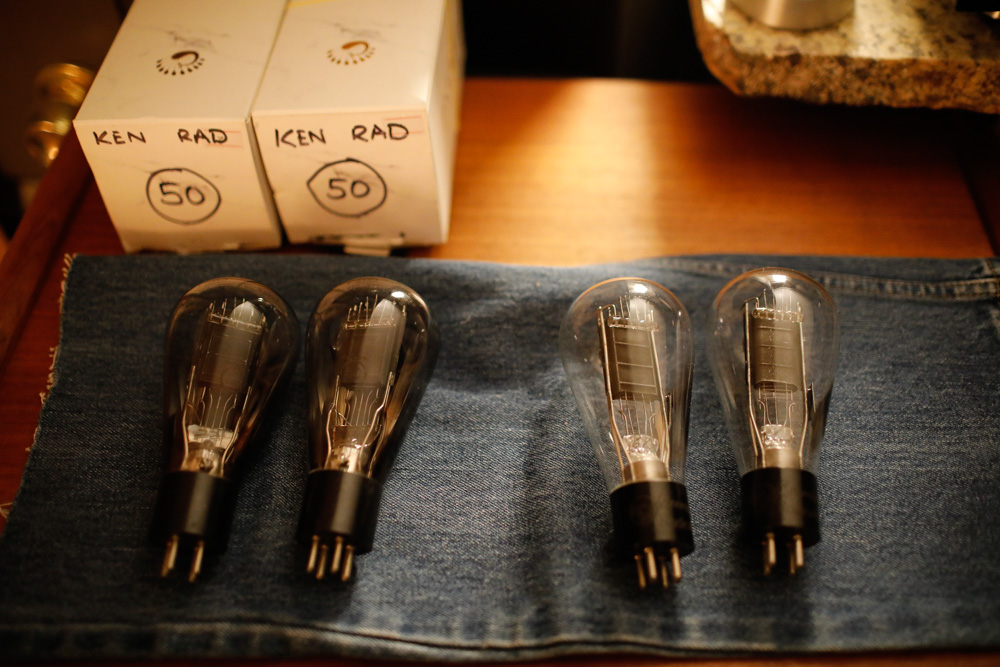
I have two pairs of 50 globes on hand, Ken-Rad and RCA/Cunningham. I’ve owned the Ken-Rad pair for years and their time has finally come. They have a darker glass, but seem to bias and sound the same as the RCA. |
||||||||
|
||||||||
|
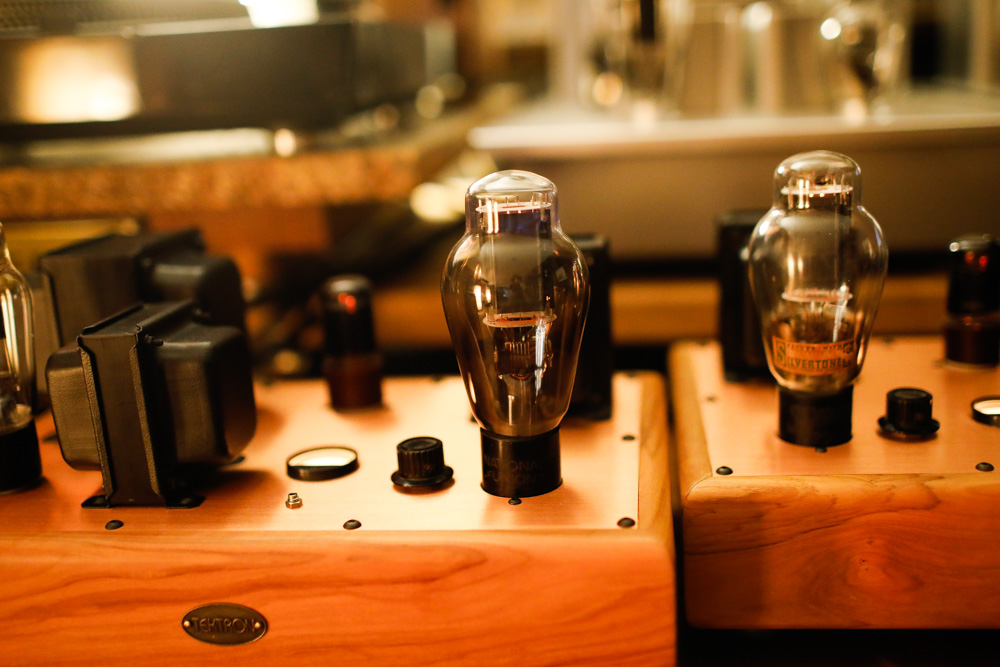
The 50 globe is very pointed sounding. It has a very realistic tonality, maybe more than any other output tube I’ve experienced before this. To make an analogy; it's the sweetest sounding 2A3 I’ve ever heard. |
||||||||
|
||||||||
|
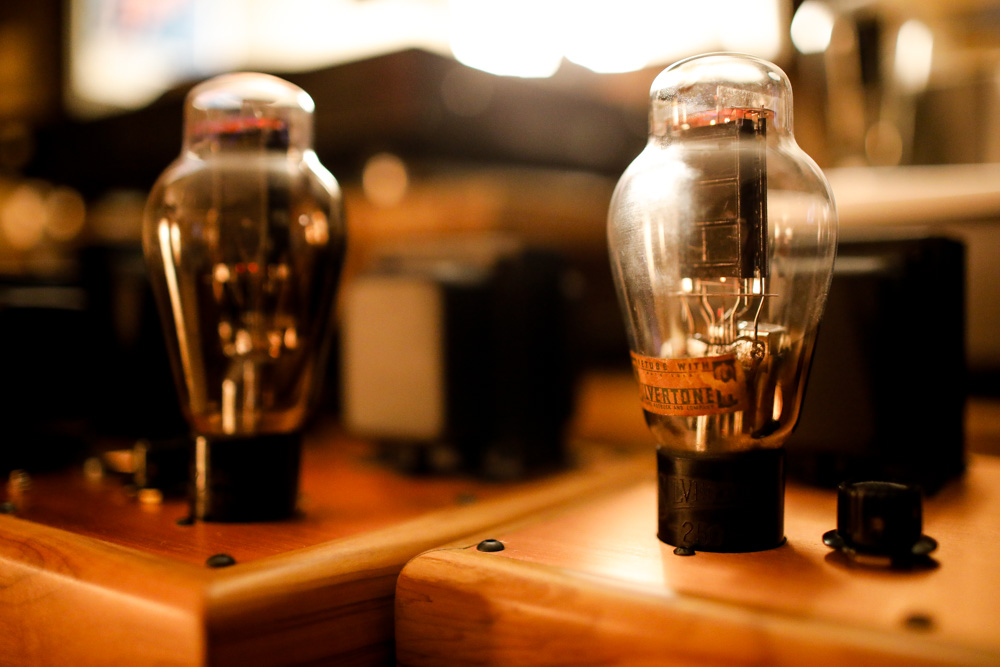
ST 50 are more plentiful on the used market for more modest prices, and do sound incredible. Even sharper perhaps than the globes, but maybe a little less spookiness. |
||||||||
|
||||||||
|
|
||||||||
|
||||||||
|
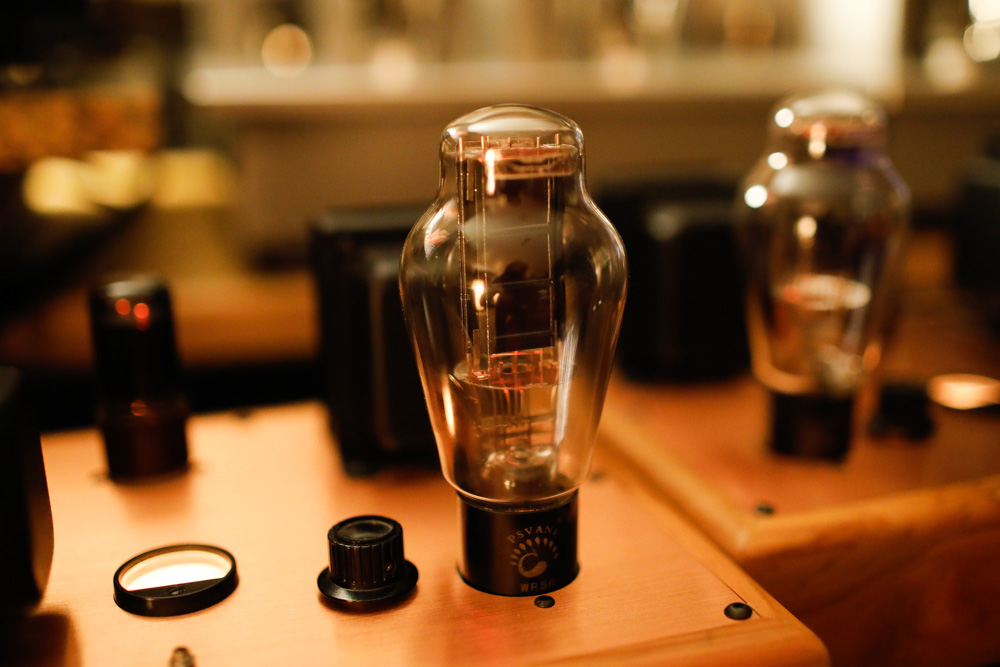
Psvane 50 ST.The Psvane sounds a lot like the 30’s ST 50 do. It seems to be a perfectly good substitute in my amps. |
||||||||
|
||||||||
|
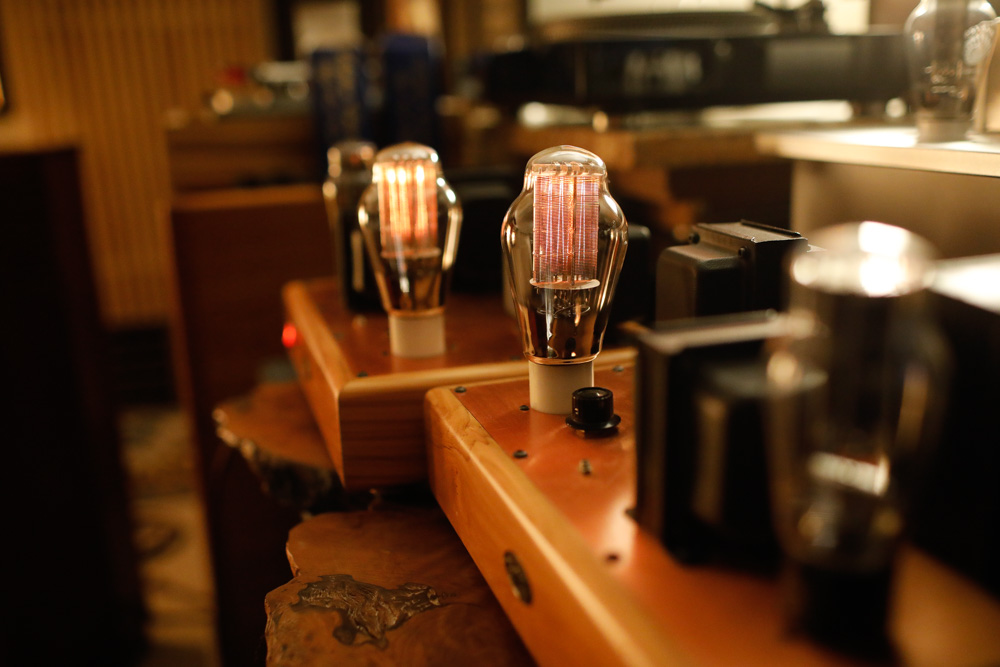
Sophia Mesh 50. The “mesh” Sophia 50 sound great! Freaking awesome actually. But what it doesn’t sound like to me is a 50 globe from the 1920s. The old globes have a better presence. The image jumps out more convincingly. The Sophia lacks some of the “spook”, and sounds driven in the same sort of way their mesh 300B and 45 tubes do. These tubes have kind of a house-sound I would say, and although there are some differences within types, they don’t really sound like the old tubes do in my opinion. |
||||||||
|
||||||||
|
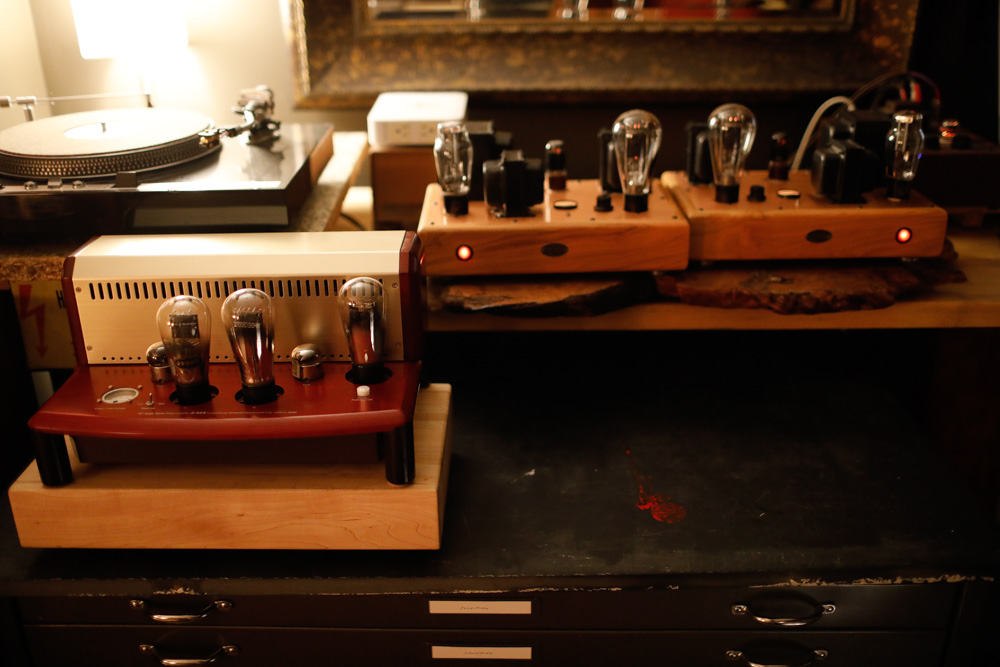
Compared to the Yamamoto A08S, my sort of "reference" for DHT sound. The Tektron are bigger imagers, and the program material sounds a little more convincing. But the Yamamoto’s sound is a bit warmer, and certainly more familiar. The 50 is a little more in the room than the 45 is. |
|
|||||||
|
|
|
|
|
|||
|
|||||||
 |
|||||||